Competitor Research vs. Continuous Market Gap Monitoring in Charlotte
Understanding the Difference Between Competitor Research and Market Gap Monitoring
For businesses in Charlotte looking to stay ahead, knowing what rivals are doing is only half the battle. Competitor research and continuous market gap monitoring serve different purposes, yet both are essential for building a strong competitive advantage. Competitor research tends to be periodic and focused on specific moves by other players. Market gap monitoring, on the other hand, is an ongoing process that looks for unmet customer needs or underserved segments in the market. Each approach has its strengths, and the right choice depends on your goals, resources, and the pace of change in your industry.
Competitor research typically involves analyzing a competitor's website, pricing signals, customer reviews, and feature comparisons. It helps you understand where you stand relative to others, what they offer, and how they position themselves. This kind of analysis is useful when you're entering a new market, launching a product, or trying to improve your own offerings. However, it can become outdated quickly if the market shifts or competitors change their strategies.
Continuous market gap monitoring takes a broader view. Instead of fixating on specific competitors, it looks for patterns in customer feedback, search visibility, and service gaps across the entire landscape. This approach helps you spot emerging trends before they become mainstream. For example, if customers in Charlotte are consistently asking for a feature that no local business provides, that is a gap worth filling. Market gap monitoring is especially valuable in fast-moving industries like e-commerce, healthcare, or home services, where customer expectations evolve rapidly.
When to Use Competitor Research
Competitor research works best when you need a clear snapshot of the competitive field. You might use it to benchmark your pricing signals, evaluate feature sets, or understand how rivals handle customer reviews. It is also helpful when you are refining your market positioning. For instance, if you run an HVAC company in Charlotte, you might study how competitors present their service guarantees or handle emergency calls. That information can guide your own messaging and operational improvements.
Web Rank Digital is also on Instagram.
However, competitor research has limitations. It tends to be backward-looking because it analyzes what competitors have already done. It can also lead to a reactive mindset where you are always trying to catch up rather than lead. If you rely solely on competitor research, you might miss opportunities that no one in your space has identified yet.
When to Use Continuous Market Gap Monitoring
Continuous market gap monitoring is better suited for businesses that want to innovate and capture new demand. Instead of copying what others do, you look for what they are ignoring. This approach requires a systematic way to collect and analyze data from multiple sources: customer reviews, search queries, social media conversations, and industry reports. The goal is to find unmet needs that you can address before anyone else does.

For example, a roofing company in Charlotte might notice through market gap monitoring that homeowners are increasingly asking about eco-friendly materials. If few local roofers offer that option, there is a gap. By moving first, the company can build a reputation as the go-to provider for sustainable roofing. This kind of insight is harder to get from standard competitor research, which tends to focus on what competitors already offer rather than what customers wish they offered.
Market gap monitoring also helps with pricing signals. You can see where customers feel they are paying too much for a certain service and where they are willing to pay more for added value. Those signals guide your pricing strategy without relying on competitor rates alone.
How the Two Approaches Complement Each Other
In practice, the most effective strategy combines both methods. Competitor research gives you a solid understanding of the current landscape. Market gap monitoring helps you spot opportunities that competitors have missed. Together, they create a fuller picture of where your business stands and where it can go.
Start with competitor research to establish a baseline. Identify your main rivals, their strengths and weaknesses, and their market positioning. Then layer on continuous market gap monitoring to track changes in customer behavior and emerging needs. Over time, you will develop a habit of looking both at what your competitors are doing and at what they are not doing. That dual focus is the foundation of a strong competitive advantage.
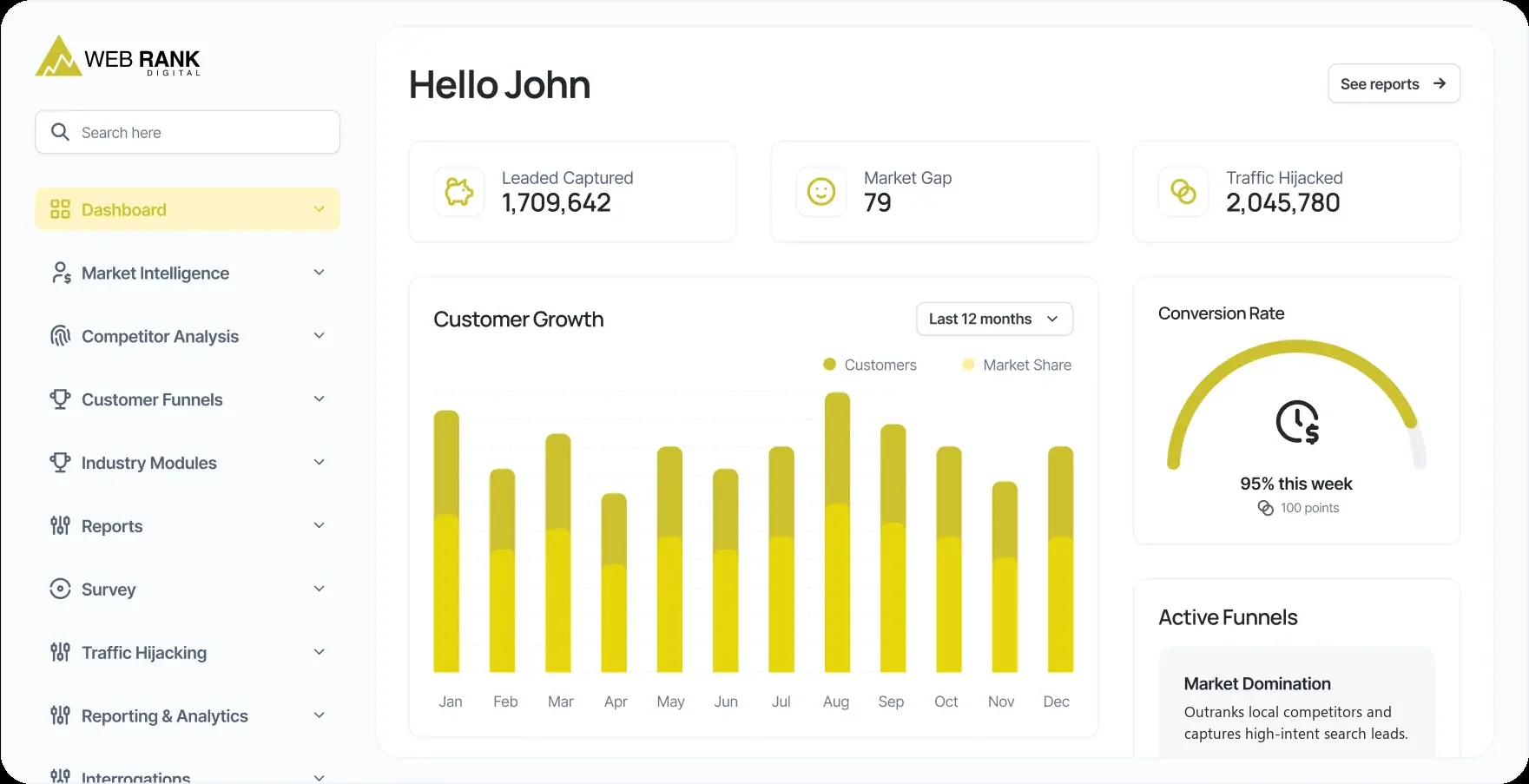
Tools like the competitor analysis system offered by Web Rank Digital can help automate the collection and analysis of competitor data, freeing up your team to focus on strategic decisions. Their platform includes a market intelligence engine that provides AI-powered customer acquisition insights, which supports both competitor research and market gap monitoring. This combination allows businesses to identify opportunities without getting bogged down in manual data gathering.
Practical Steps for Getting Started
If you are new to either approach, start small. For competitor research, pick two or three main competitors and analyze their online presence, pricing, and customer feedback. Look for patterns in their customer reviews: what do customers praise, and what do they complain about? Those complaints often point to service gaps you can fill.

For market gap monitoring, set up alerts for industry keywords in Charlotte and monitor customer conversations on social media and review sites. Pay attention to questions that come up repeatedly. If customers keep asking about a feature or service that no one offers, that is a gap worth exploring. You can also analyze search visibility data to see what terms potential customers are using but not finding good results for.
Document your findings and revisit them regularly. Market conditions change, and what was a gap last quarter may no longer exist. Similarly, a competitor's move might close a gap or open a new one. Staying flexible and updating your analysis ensures you are always working with current information.
Common Pitfalls to Avoid
One common mistake is treating competitor research as a one-time project. Markets evolve, and so should your understanding of the competitive field. Another pitfall is focusing only on direct competitors while ignoring indirect ones or entirely different industries that serve the same customer need. For example, a Charlotte restaurant might compete not just with other restaurants but also with meal kit services and grocery stores.
Another mistake is relying on market gap monitoring without validating the opportunity. A gap might exist, but it might not be large enough to justify the investment. Always test your assumptions with real customer feedback before committing significant resources. Finally, avoid getting overwhelmed by data. Both approaches generate a lot of information, but not all of it is actionable. Focus on insights that align with your business strategy and customer base.
Choosing the Right Approach for Your Business
The choice between competitor research and continuous market gap monitoring is not either-or. Most businesses benefit from a mix of both. If you are in a mature industry where competitors are well-established, competitor research might be more useful for finding small differentiators. If you are in a fast-growing or fragmented market, market gap monitoring could uncover bigger opportunities.
Consider your resources as well. Competitor research can be done with limited tools by manually reviewing websites and reviews. Market gap monitoring often requires more systematic data collection and analysis, which tools like the Web Rank Digital competitor analysis system can support. Their platform includes automated customer funnels and multi-industry optimization, making it easier to act on the insights you gather.
Ultimately, the goal is to build a practice of continuous learning about both your competitors and your market. By combining periodic deep dives with ongoing monitoring, you can stay ahead of trends, respond to threats, and capture new opportunities as they arise. In a dynamic market like Charlotte, that balanced approach can be the difference between merely keeping up and leading the pack.
For more information about how a competitor analysis system can support your business strategy, contact Web Rank Digital at 401 s Graham st, Charlotte, NC 28202, or call +1 877-726-5871.